In Singapore, a DIY microcement set is usually bought from a microcement product supplier or a brand’s local distributor, rather than off the shelf at a general hardware shop. A typical set holds the base and finishing material, a resin or mixing liquid, a sealer and sometimes basic tools. It suits small, dry projects such as a side table, a shelf, decor pieces or a practice panel. Wet bathrooms and large floors are better left to a trained applicator.
What a DIY microcement set usually contains
Sets differ from brand to brand, but most include:
- Base coat material: a coarser mix that builds the body of the finish.
- Finishing coat material: a finer mix for the smooth final texture.
- Resin or mixing liquid: combined with the powder on site, unless the system comes premixed.
- Colour: either pre-tinted material or a separate pigment pack.
- Primer or bonding coat: some systems need one, others are designed to go on without it.
- Sealer or top coat: the protective layer that resists water and stains.
- Tools: sometimes a trowel, a spatula, sanding pads and a roller.
Check exactly what is in the box before you buy. A set that leaves out the sealer, or assumes a primer you do not have, is not a complete system.
What a DIYer can realistically do
Microcement is a hand-trowelled finish, and trowelling is a skill that takes practice. Starting small keeps mistakes cheap and easy to redo:
- Practice panels and sample boards, to learn the technique and check the colour
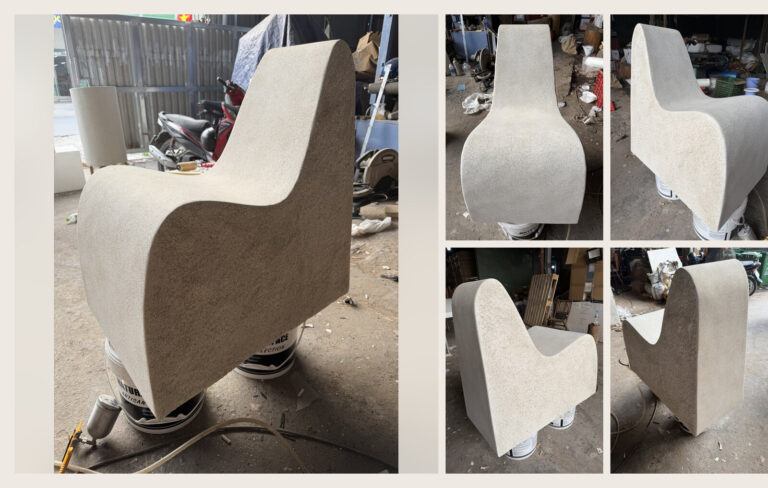
- Small furniture, such as a side table, stool or shelf
- Decor such as planters, bowls, trays and lamp bases
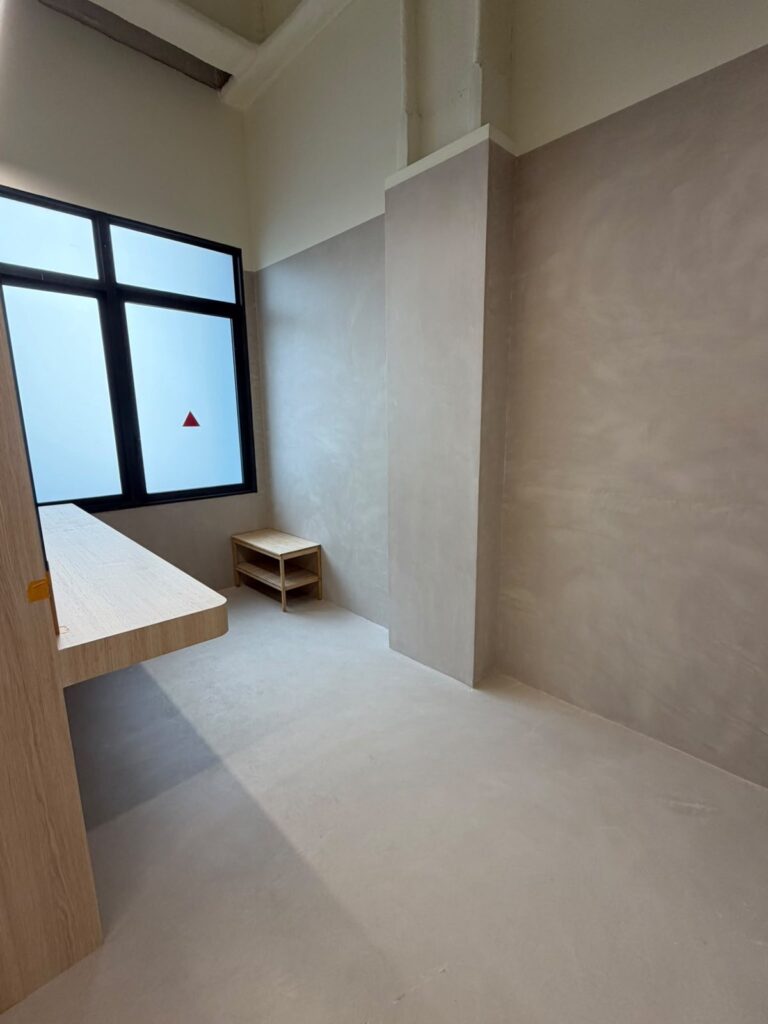
- A feature wall in a dry room, once you are confident on boards

What is better left to a professional
- Bathrooms and showers. A wet area needs a sound waterproofing membrane underneath and careful detailing at drains, corners and kerbs. A mistake here can mean a leak into the unit below. See is microcement waterproof enough for a bathroom.
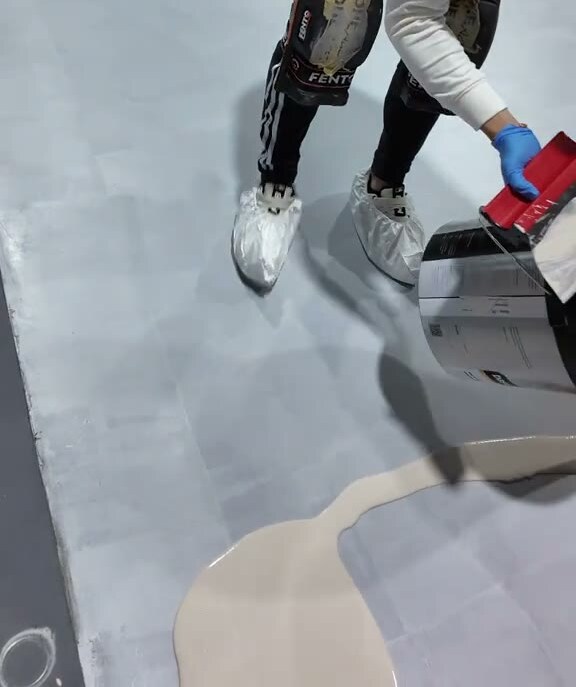
- Large floors. Floors show every trowel pass in low, raking light, need to be worked in a planned sequence and take daily wear.
- Over existing tiles. Hollow tiles, grout lines and joints need checking and preparing, or they can show through or crack later.
- Shops and offices, where downtime and a consistent finish matter.
In an HDB flat or condo, also check your renovation rules with HDB or your management office before starting any floor or bathroom works.
How to buy a DIY set in Singapore
- Buy from someone who can support you. Microcement systems are brand-specific: the base, finish and sealer are designed to work together. A local supplier or distributor can tell you which products suit your surface and answer questions mid-project.
- Describe the surface. Timber, MDF, plaster, tiles and metal each need different preparation.
- Buy the full system from one range. Mixing a base from one brand with a sealer from another is a common cause of problems.
- Ask for the technical data sheet. It should cover coverage, drying time between coats, curing time and cleaning.
- Order a little extra for a practice board and touch-ups.
- Check the colour on a sample. A small chip can look quite different across a whole surface.
Tips if you go ahead
- Practise on a board before touching the real piece
- Prepare the surface properly: clean, sound, dry, and sanded or keyed
- Work in thin layers and respect the drying time between coats, which humid Singapore weather can stretch
- Never skip the sealer
- Wear gloves when mixing and a dust mask when sanding
How Jiu Ding Sheng can help
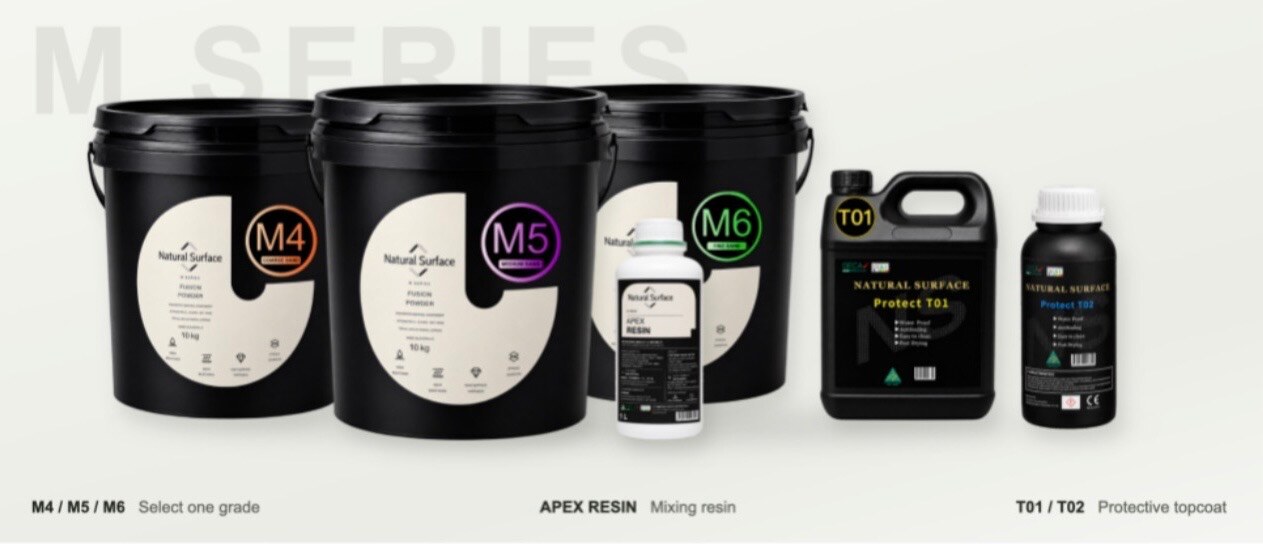
We supply and apply the Natural Surface M Series from Australia, a premixed microcement system offered exclusively for Asia. It goes on at 1 to 1.5mm in four layers (a base coat, a face coat and two top coats) with no primer. If you are planning a DIY project, tell us what you want to cover and we will say honestly whether a DIY set suits it or whether it is a job for an applicator. See the system on the Material page and finished surfaces on the Projects page.
Related: how to choose a microcement contractor and how thick a microcement overlay is.
Quick answers
Can I buy microcement at a hardware shop in Singapore?
Complete microcement systems are more often sold through specialist suppliers and brand distributors than general hardware shops. A specialist can also advise on preparation and which products to use together.
Is microcement easy to DIY?
Small, dry surfaces are manageable with practice. Trowelling takes time to learn, so practise on a board before working on furniture or walls.
Can I DIY a microcement bathroom?
It is not recommended. A wet area needs a sound waterproofing membrane and careful detailing at drains and corners, which is work for a trained applicator.
What should a DIY microcement set include?
Base and finishing material, the resin or mixing liquid unless it is premixed, a sealer or top coat, and clear instructions. Some sets add pigment and basic tools.
Next step
Planning a small microcement project yourself? WhatsApp us to ask whether a DIY set suits your project. WhatsApp +65 8049 1188 or use the contact page.