 JIU DING SHENGJDS Microcement
JIU DING SHENGJDS Microcement
JIU DING SHENGJDS Microcement
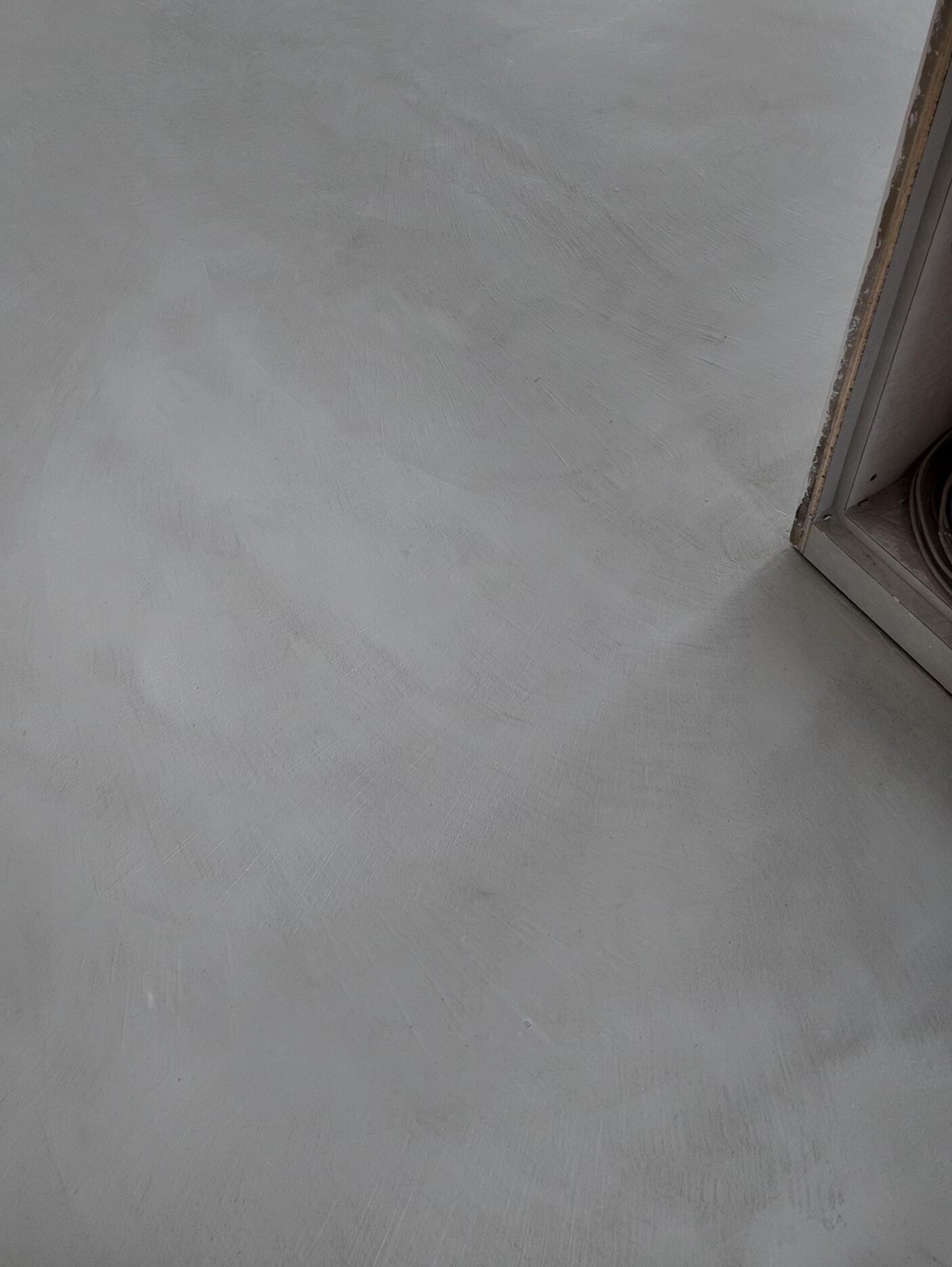
A thin, hand-applied cement coating that turns walls, floors and furniture into one continuous surface.
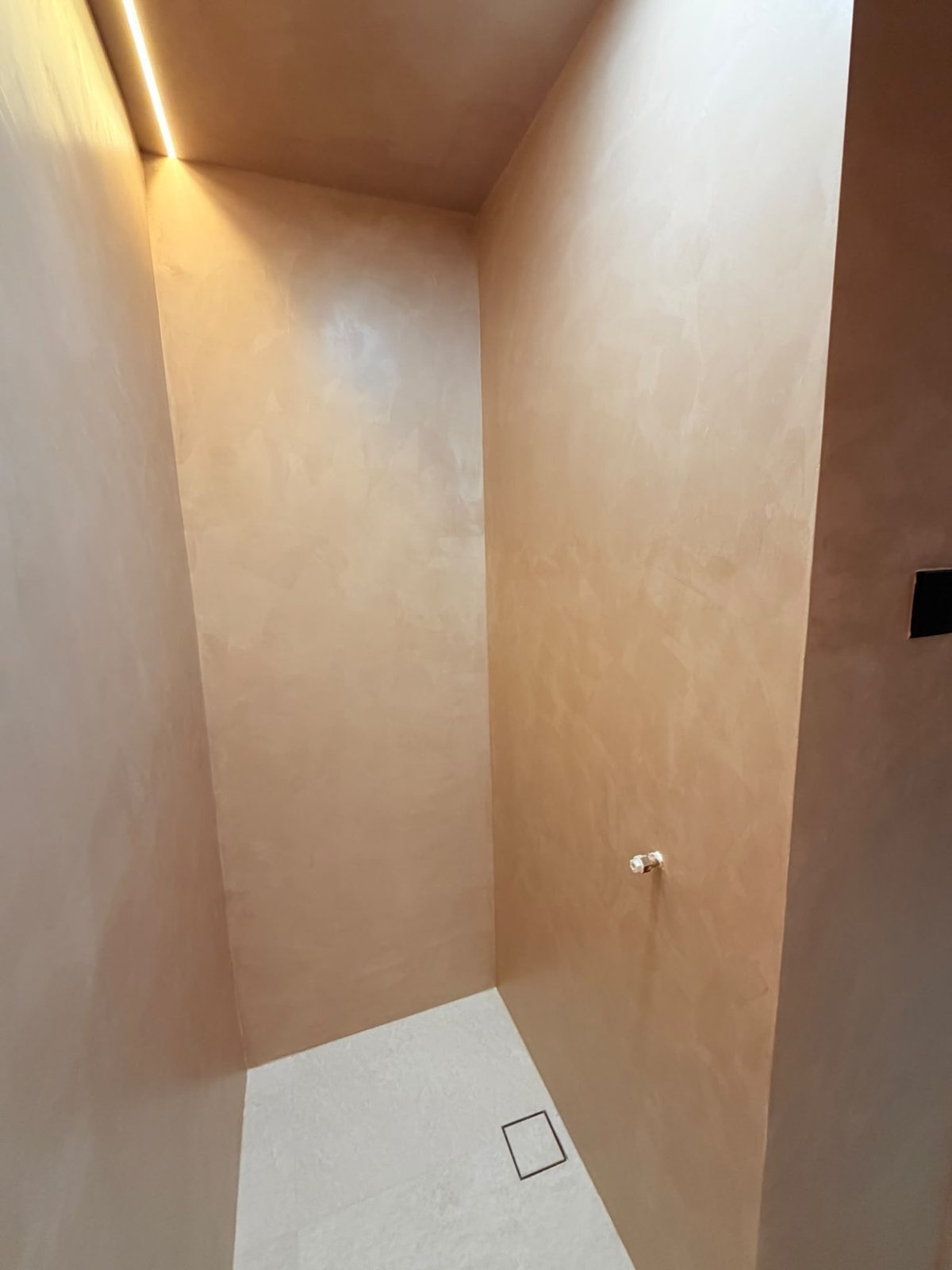
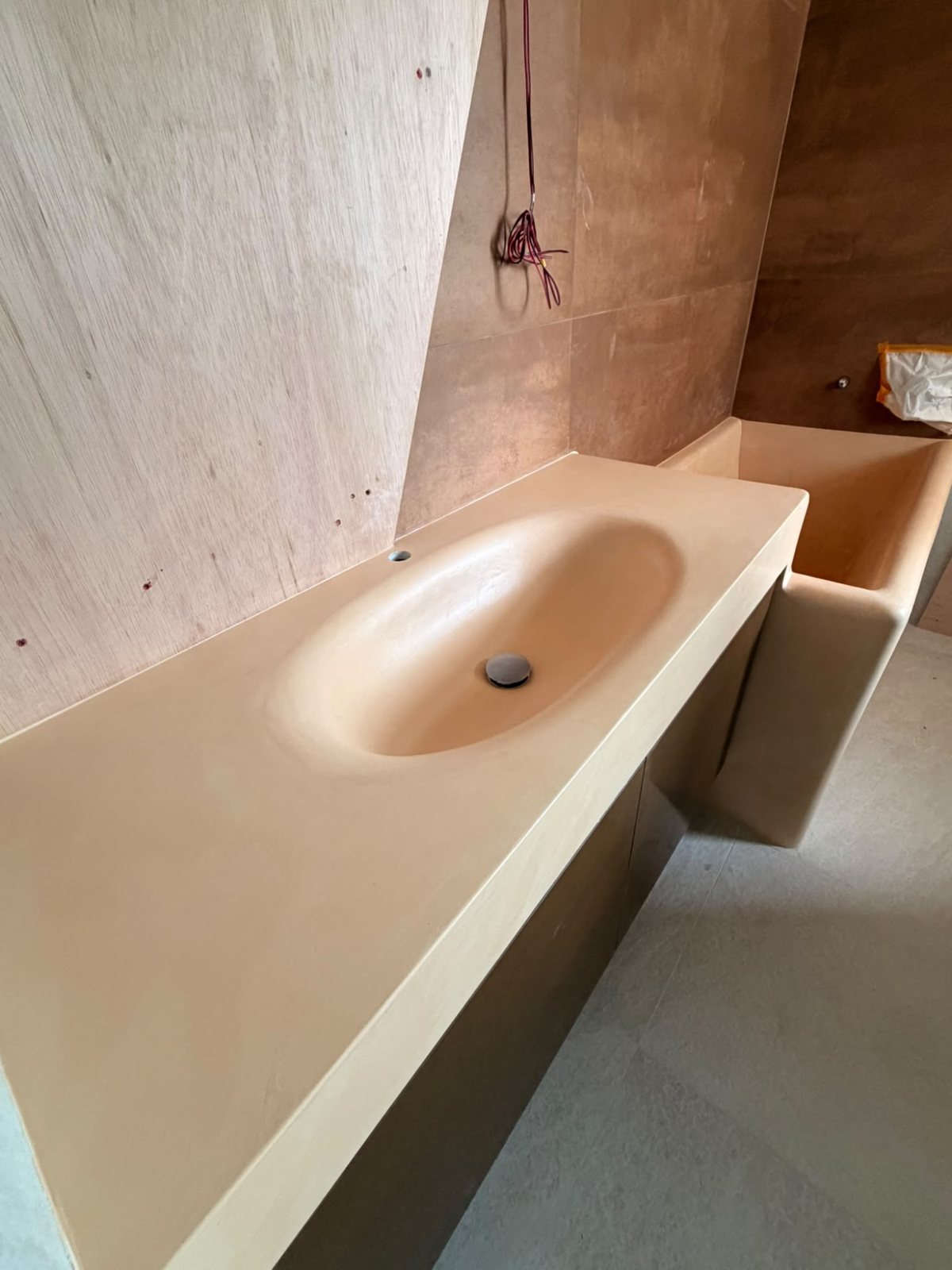
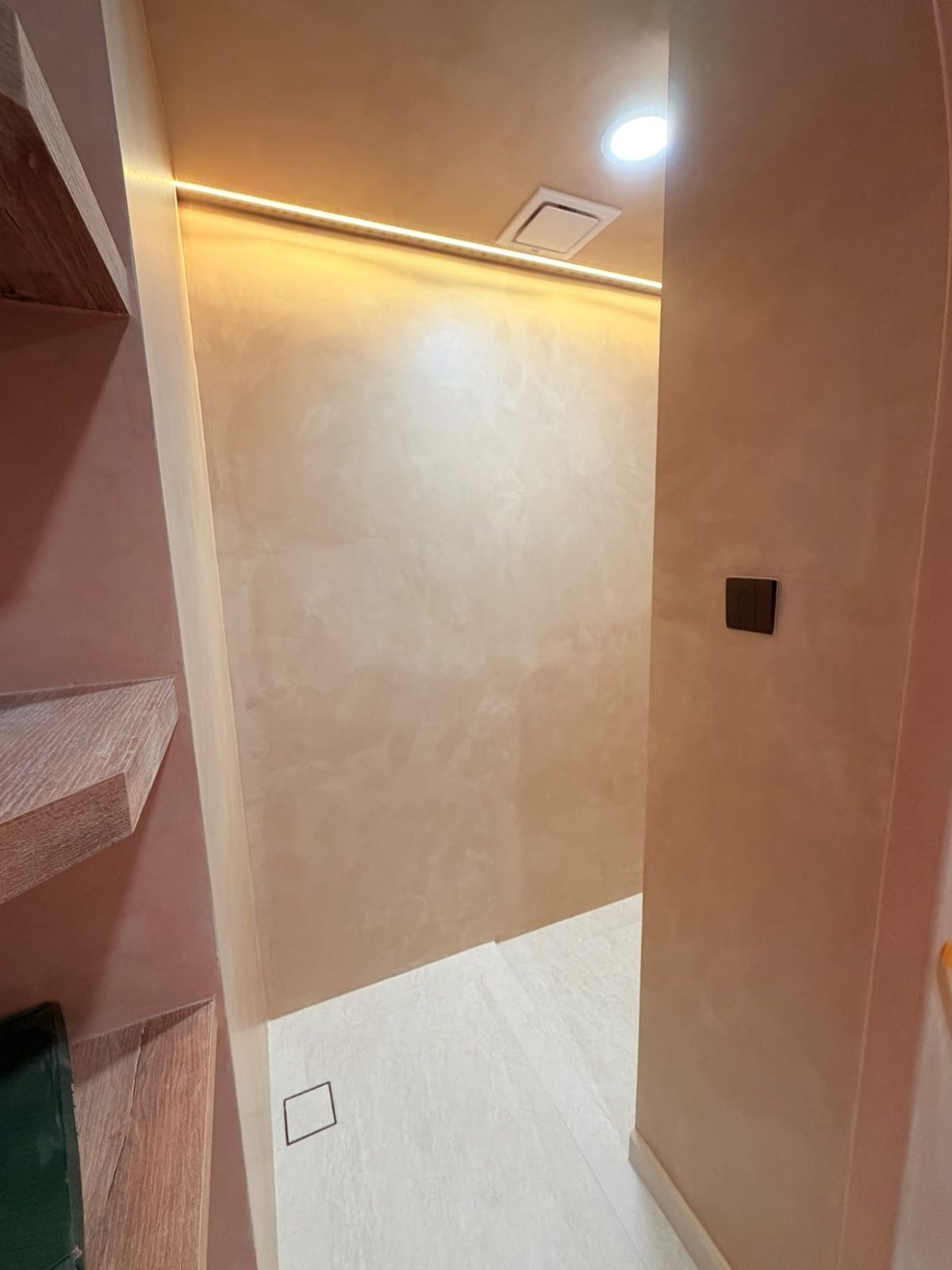
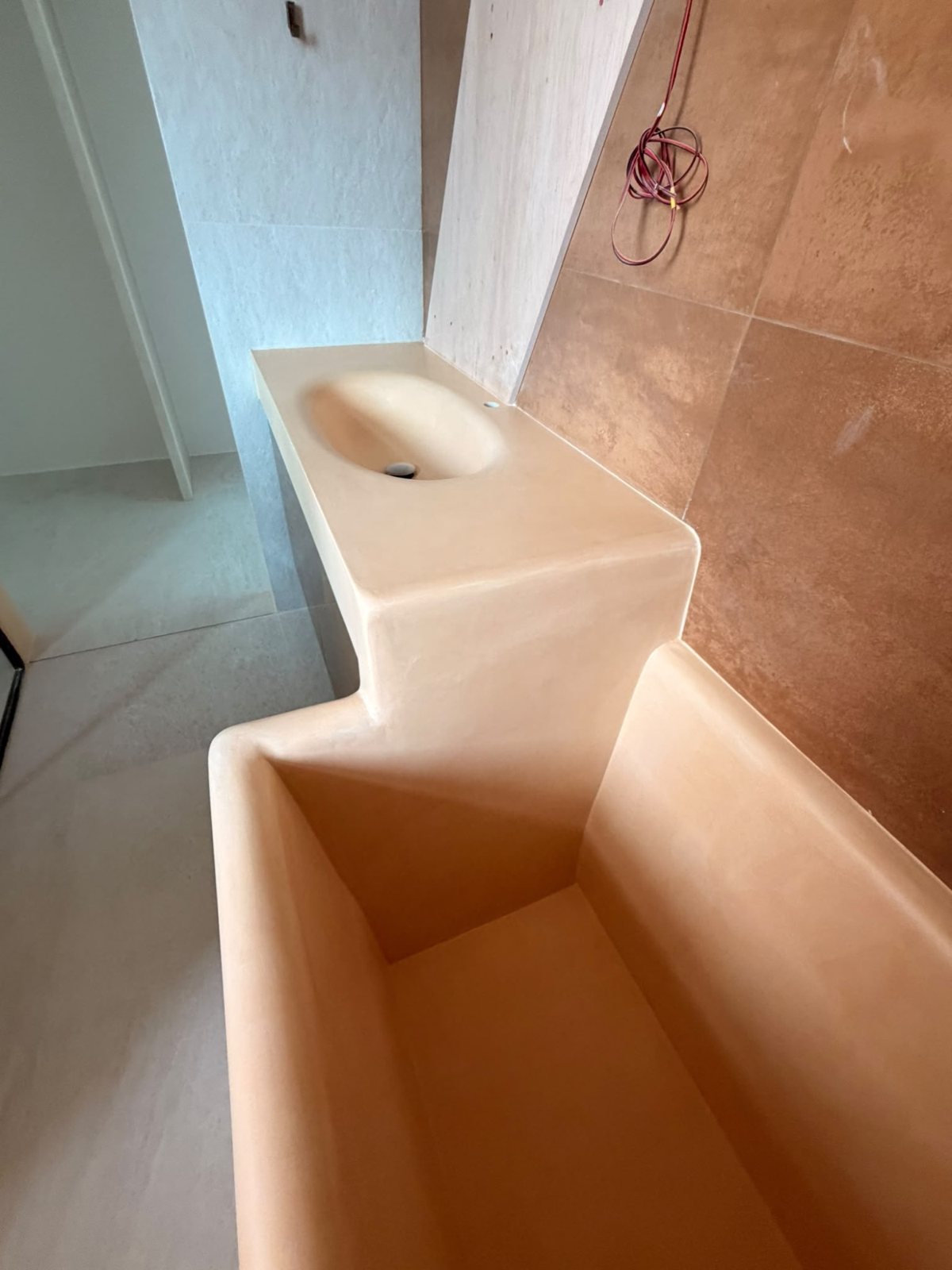
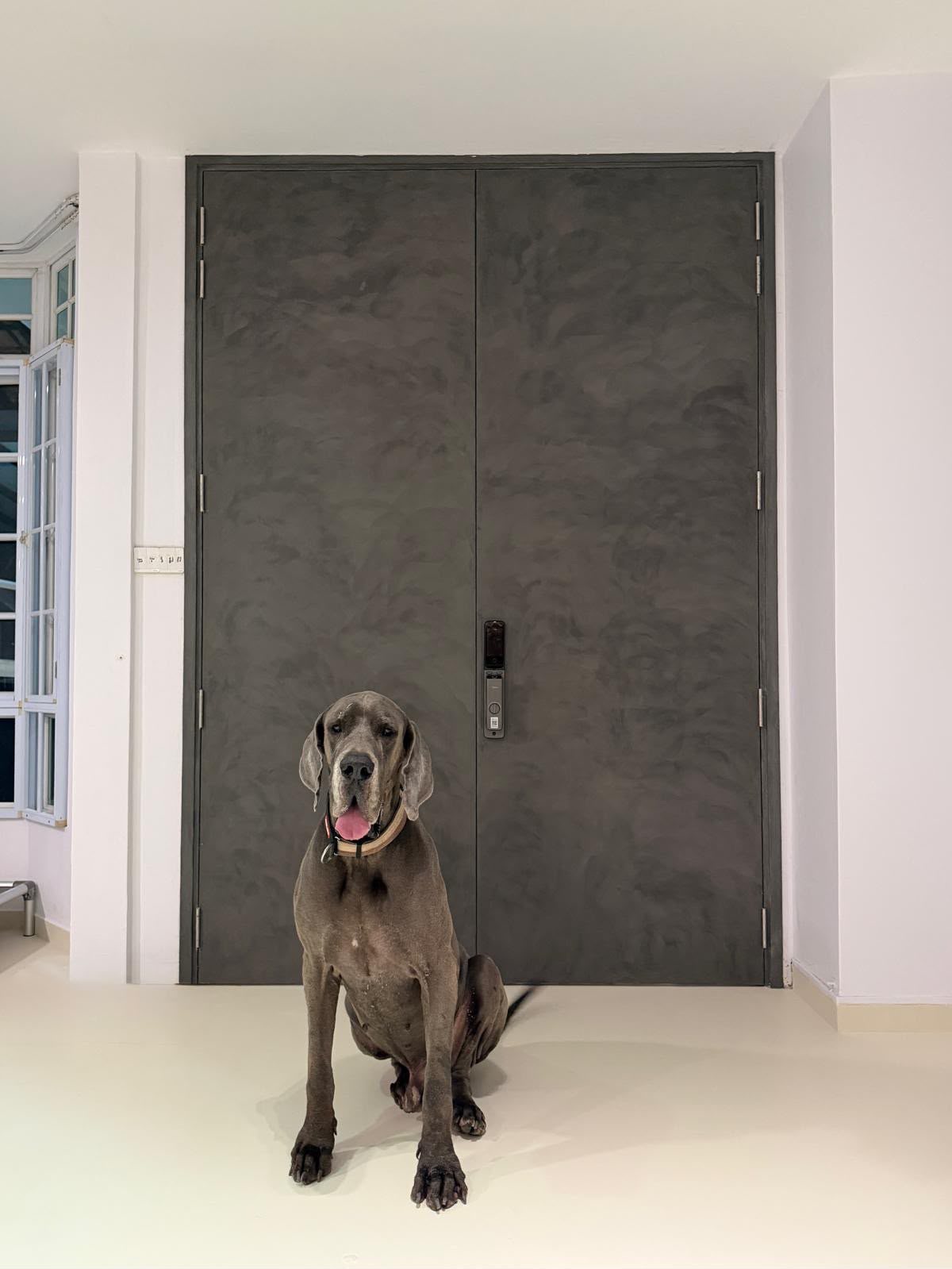
Microcement is a polymer-modified cement coating, applied in successive hand-trowelled layers and then sealed. Because it is bonded rather than laid, it goes over tile, concrete, screed, plasterboard and carpentry. Because it is continuous, there is nothing between one square metre and the next: no joint, no line, nothing to re-grout.
Which is why your tiles stay where they are, your floor height barely moves, and your doors still close. Four layers, no primer. Here they are, in order.
We survey what is already there and prepare it. Sound, level, well-bonded tiles stay exactly where they are, and no primer is needed.
One continuous surface across walls, floors and steps. No grout lines, and in this climate no grout means nothing for mould to grow in.
Used on bathroom walls, vanities, balconies and outdoor areas. The water resistance comes from the sealed system over a sound membrane. We will tell you honestly where it belongs and where it does not.
Hairline cracking comes from the substrate, not the product, which is why we survey yours before we quote and only lay over a sound surface.
Sealed for daily life: shoes, chairs, children, cooking. pH-neutral cleaner and a mop is the whole maintenance routine.
Laid straight onto sound tiles. No hacking, no debris, no raised floor, no doors that stop closing.
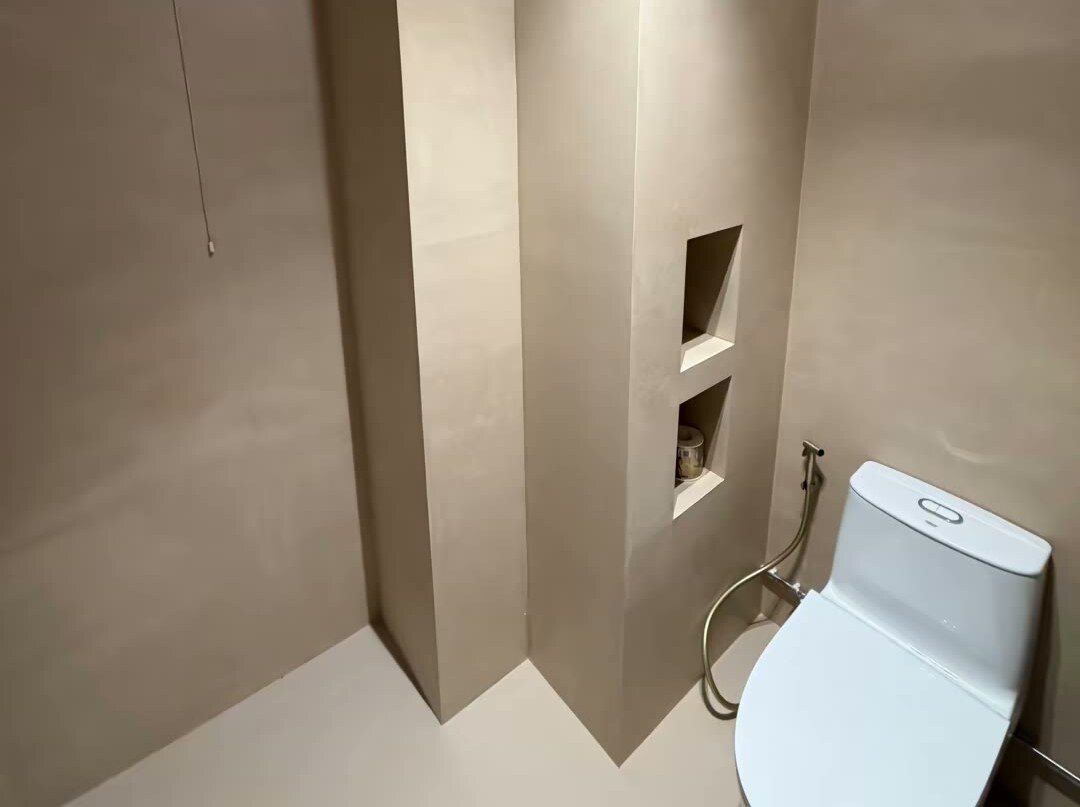
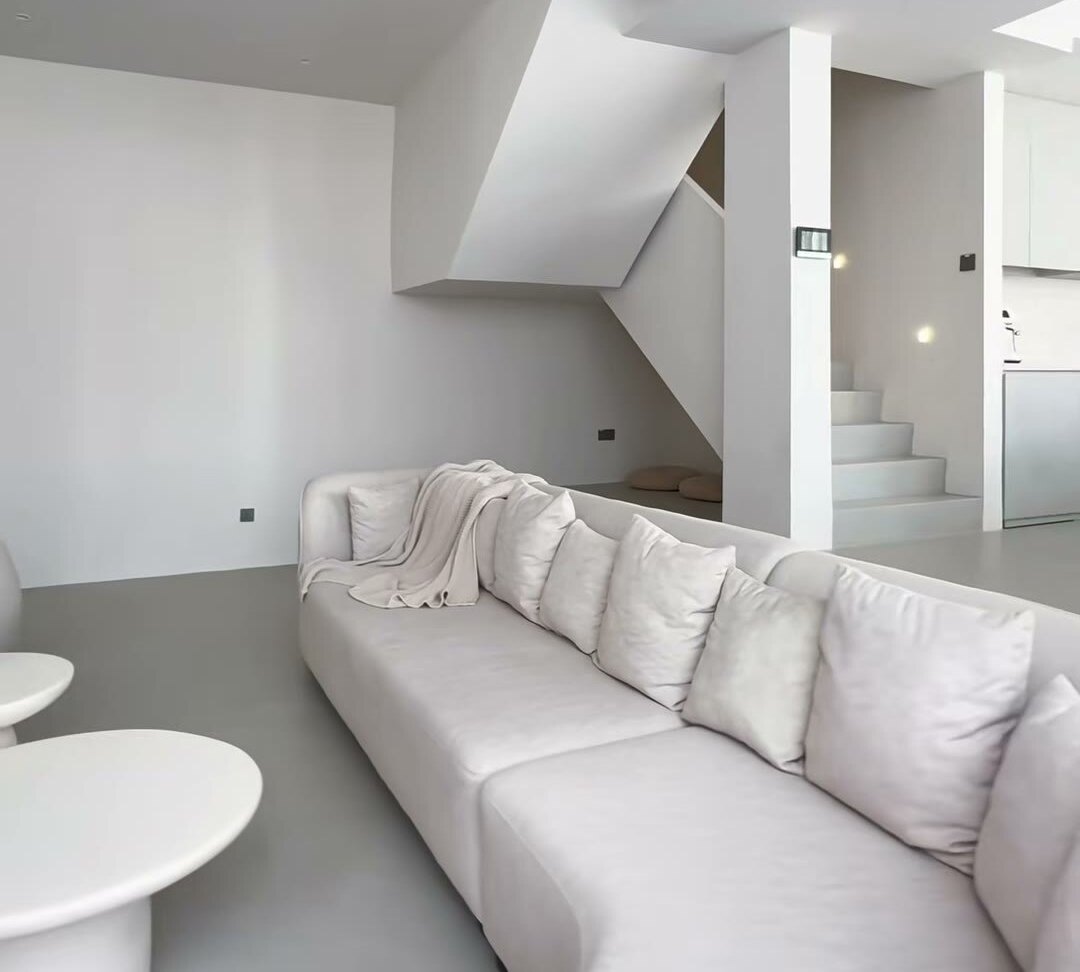
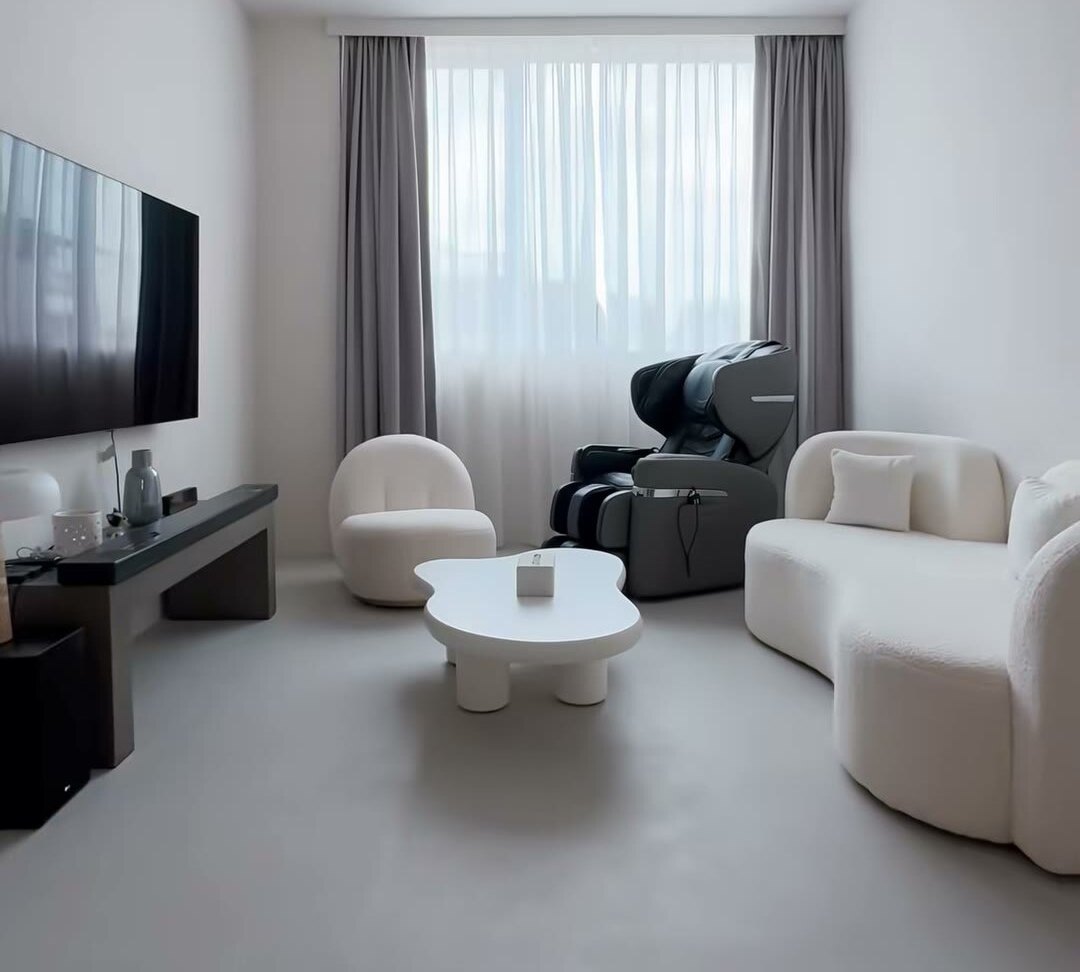
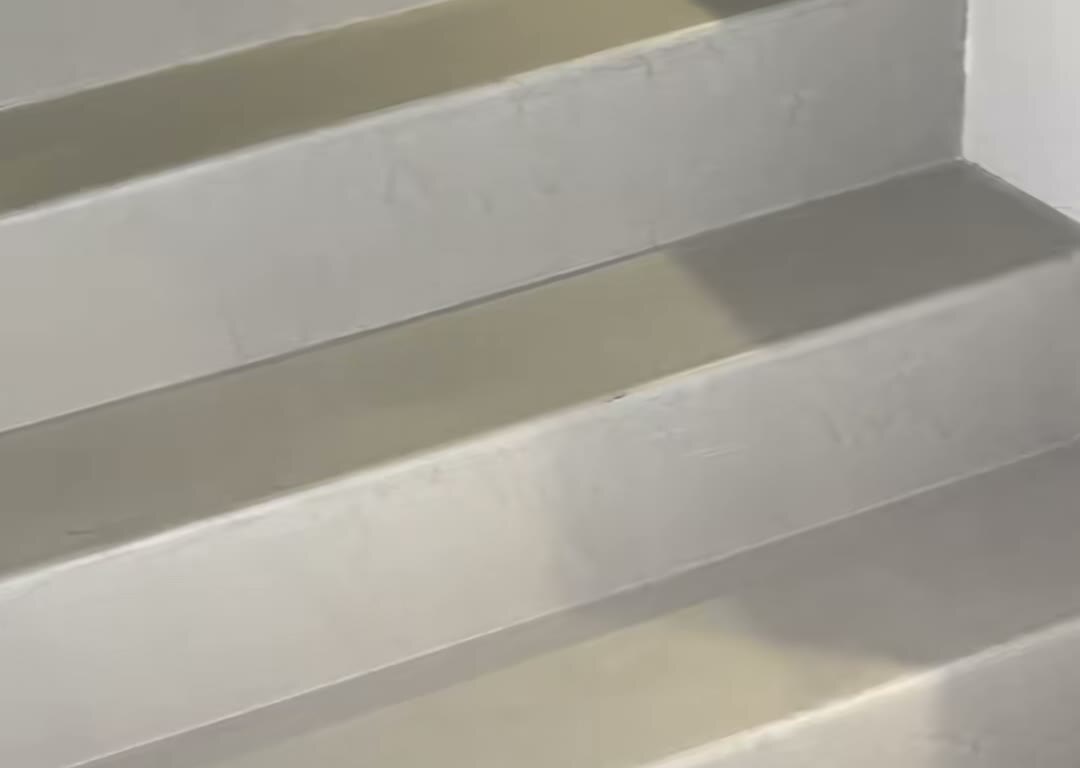
Walls, vanity fronts and kerbs in one unbroken surface. It is the single most common reason people call us.
Splashbacks, islands and worktop faces without a grout line anywhere near the cooking.
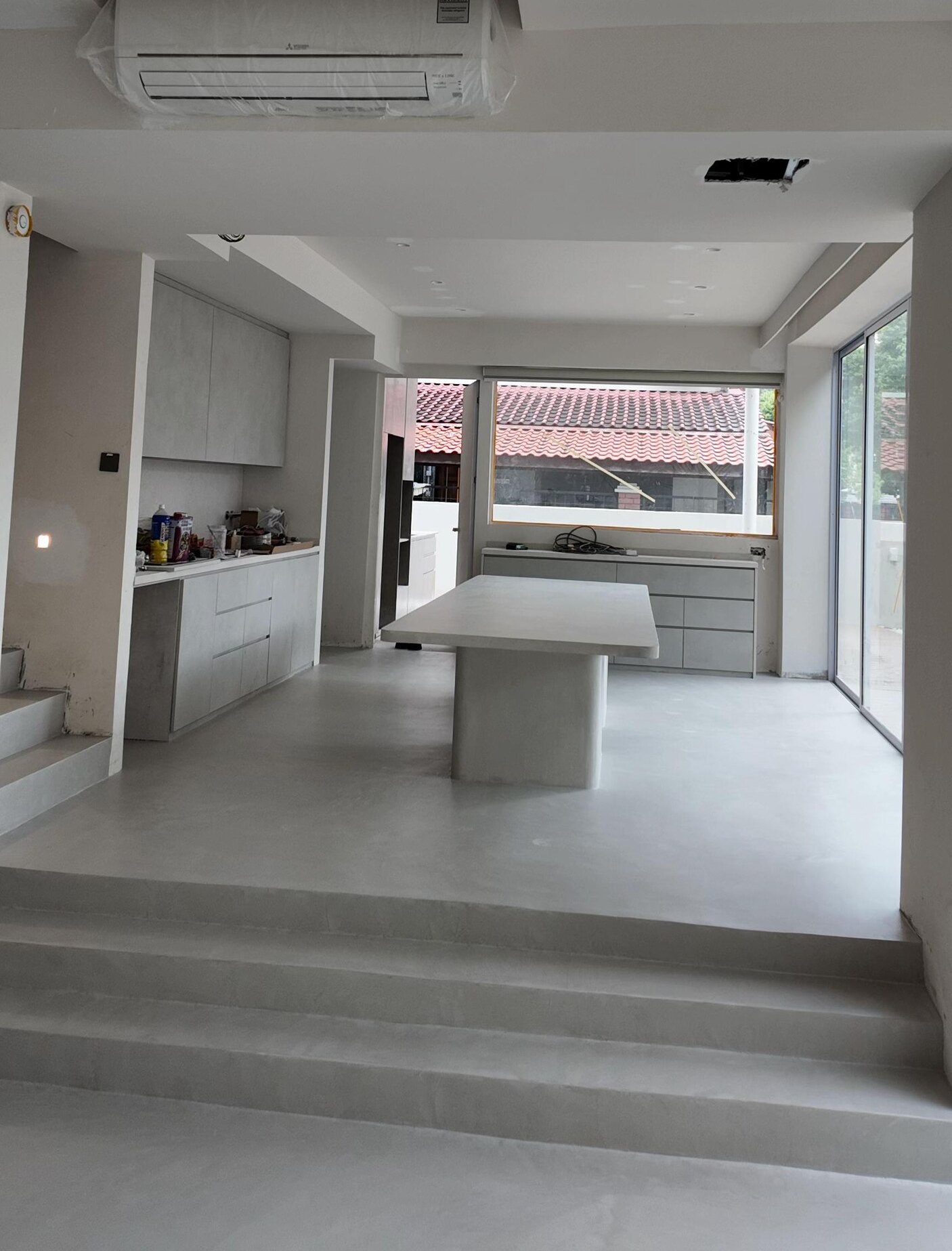
Warm, quiet floors that run wall to wall with no joint and no transition strip.
The wall people notice. Tonal and cloudy, and best lit from the side so the trowel movement reads.
Treads, risers and steps carried through in the same surface, with an anti-slip topcoat where it is needed.
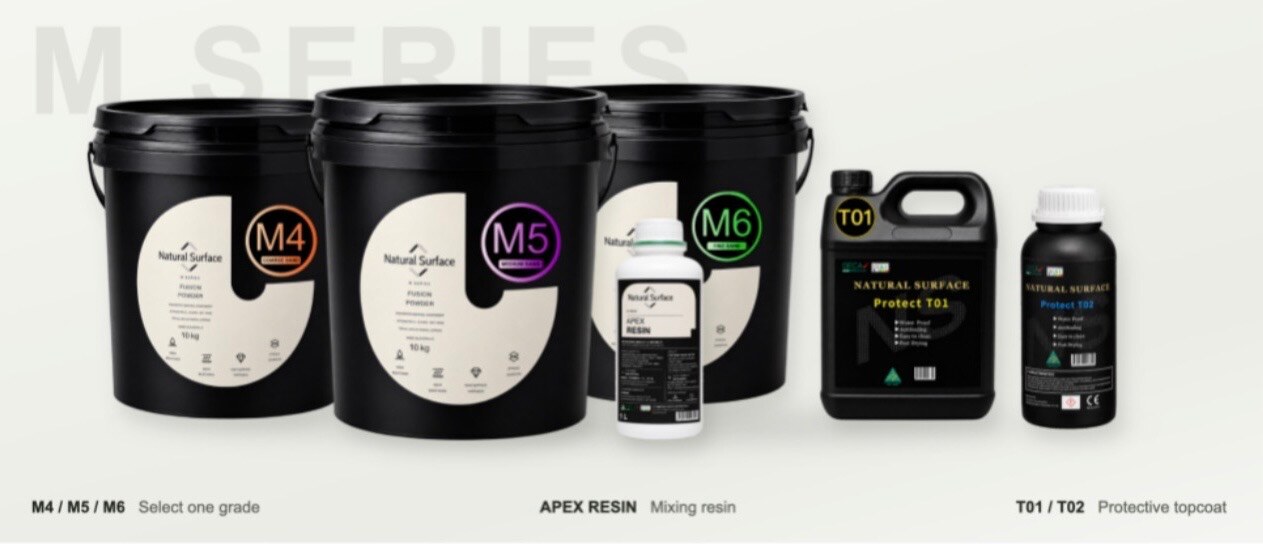
There is a wide gap between a properly formulated system and a cheap mix sold under the same name, and you find out two years in, not on quotation day. We work with Natural Surface from Australia: the M Series, premixed so every batch is consistent, and configured as three systems (NS Grit, NS Solid and NS Xtreme) so each project, area and use gets the build-up it needs. Before you sign with anyone, ask to see their showroom, ask to see a finished site rather than a render, and ask which product they use and where it comes from. We are happy to answer all three.
Over them, and that is the main reason homeowners choose it. Sound, level, well-bonded tiles are prepared, then microcement is laid over the top at 1-1.5mm, with no primer. No hacking, no debris removal, and none of the noise or downtime a full re-tile involves. We survey the substrate first; if it is not sound, we will say so rather than lay over a problem.
The cement body itself is porous. The water resistance comes from the sealed system, two protective top coats, over a sound waterproofing membrane. Walls, vanities and kerbs are straightforward. Shower floors only where there is a proper membrane underneath. We would rather scope it honestly than promise you something that leaks in year three.
Hairline cracking is almost always substrate movement rather than a product defect, and older resale units move more than new ones. That is why we look at your floor before quoting, and why we occasionally decline a substrate.
Around 1-1.5mm on walls and floors, built up in four layers, versus 40-60mm for a cement screed and new tile. In practice thresholds and door clearances stay where they are. It is the single biggest practical advantage of an overlay.
With the Natural Surface M Series, a bathroom usually takes 3-4 working days (it used to be 6-8), and a whole unit usually takes 4-6 working days (it used to be 8-10). We confirm the timing for your space when we quote.
HDB restricts hacking and replacing the original bathroom floor and wall finishes in the first three years from key collection. Do check your own conditions with HDB. An overlay that does not disturb the original finish or the waterproofing is generally the route people take, which is exactly what microcement is.
It is scratch resistant, not scratch proof. Dragged furniture will mark it, the same as any surface. For wet floors we put an anti-slip additive in the topcoat and we will put the specification in writing. Ask us for it.
pH-neutral cleaner and a mop. Avoid bleach and ammonia, which strip the sealer. On a busy floor the sealer can be refreshed after a few years to bring it back to new. We will tell you what that costs before you commit, not after.
Please do. We keep real sample boards and finished surfaces at the Tampines showroom, and honestly, a screen cannot show you what a hand-trowelled surface does in daylight. Message us and we will arrange a time.
Send the rooms, the rough area and a photo of what is on the surface now. We will come back with a realistic quote, not a guess.