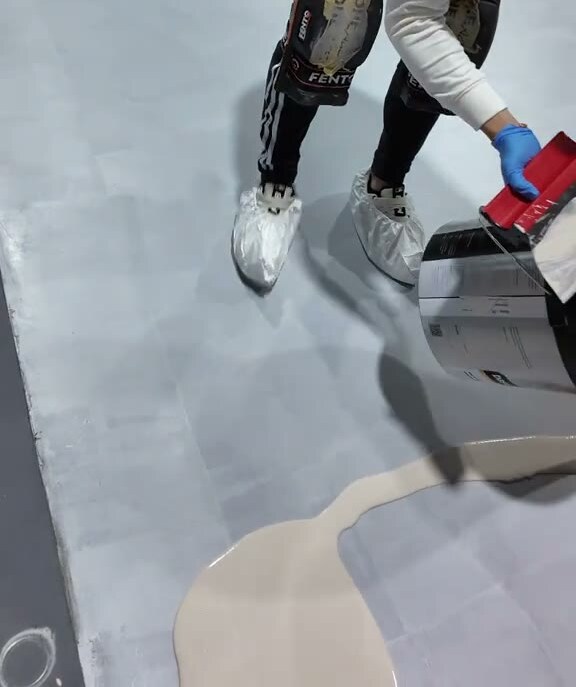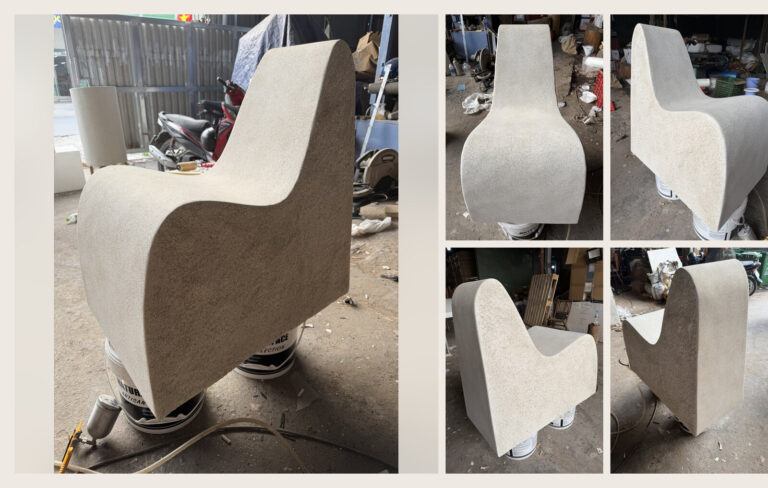

For most living spaces in a home, microcement is usually the better fit: it gives a matte, mineral look, can run seamlessly from floors onto walls, stairs and bathrooms, and goes over existing tiles at a few millimetres thick. Epoxy is a resin coating that is often a better choice for garages, storerooms and utility areas where a hard, glossy, easy-wipe floor matters more than looks.
Both are seamless. They are different materials with different strengths.
The quick difference
- Microcement is a polymer-modified cement coating, hand-trowelled in thin layers and then sealed. It looks and feels like stone or plaster.
- Epoxy is a two-part resin that sets into a hard plastic-like coating, often rolled or poured and self-levelling. It tends to look glossy and uniform.
Side by side
Look and feel
Microcement has tonal movement and visible hand-trowel marks, so no two walls are identical. Epoxy is usually flatter and shinier, with a more synthetic feel underfoot.
Where it can go
Microcement bonds to floors, walls, stairs, vanities and furniture, so one finish can run through a room. Epoxy is mainly a floor coating.
Over existing tiles
Microcement is commonly laid over sound, well-bonded tiles without hacking. Epoxy can also go over prepared surfaces, but grout lines and tile edges tend to telegraph through a thin coating unless the floor is levelled first.
Bathrooms
Sealed microcement is used on bathroom walls, vanities and floors over a sound waterproofing membrane. Epoxy is less common for bathroom walls in homes.
Sunlight
Many epoxy coatings can yellow or change colour under strong UV over time unless a UV-stable top coat is used. Ask about this if the floor is near large windows or a balcony.
Scratches and wear
Both resist everyday wear when properly sealed or coated. Neither is scratch proof. Dragged furniture can mark either one. Epoxy is often chosen for heavy-duty areas like garages.
Maintenance
Microcement is cleaned with a pH-neutral cleaner and a mop, and the sealer can be refreshed on busy floors after a few years. Epoxy is also easy to wipe and can be recoated when worn.
Which suits which room
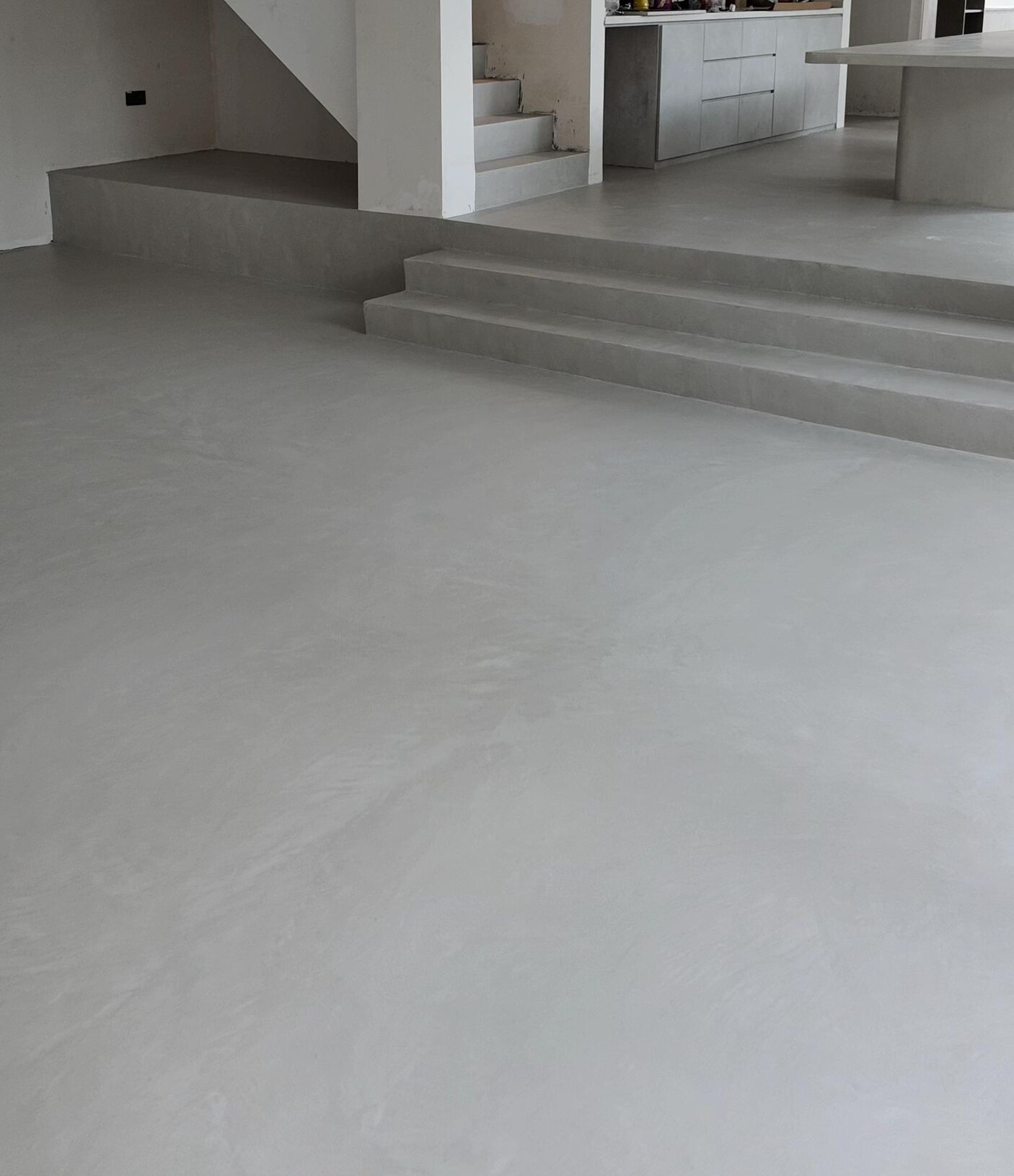
- Living and dining: microcement, for the look and the continuous wall-to-wall finish
- Bathrooms: microcement over a sound membrane, with anti-slip on wet floors
- Stairs and steps: microcement, carried through in the same surface
- Garage, workshop, store: epoxy is often the practical choice
Singapore considerations
In HDB flats and condos, the big advantage of a thin overlay is that you keep your existing tiles and floor height when they are sound, so doors still close and there is no hacking. In humid bathrooms, having no grout lines removes the place mould usually starts. In landed homes, both materials might appear in different parts of the house.
Cost and disruption
Neither material has a fixed price that applies to every home. For both, the cost depends on the area, the condition of the existing floor and how much preparation is needed. The bigger practical difference is disruption. If your tiles are sound, a microcement overlay avoids hacking, debris and a new screed bed. If the existing floor needs heavy grinding or levelling for epoxy, that adds dust, noise and time. Ask each installer what preparation your floor needs before comparing quotes.
Questions to ask either installer
- What exactly is the product, and how many coats or layers?
- What is the total thickness?
- How is the existing floor prepared?
- How slip resistant is the finish when wet?
- What should we clean it with, and when will it need recoating?
How Jiu Ding Sheng approaches floors
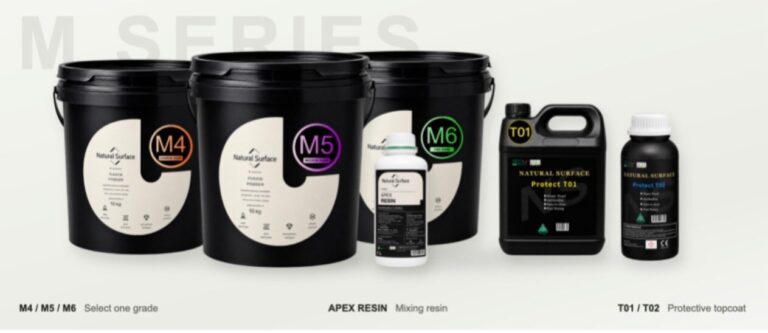
We do microcement only. We use the Natural Surface M Series from Australia, laid at 1 to 1.5mm in four layers with no primer: base coat, face coat and two top coats. We survey the floor before quoting and only lay over a sound surface. A whole unit usually takes 4 to 6 working days. See our two finishes on the Finishes page and finished floors on the Projects page.
Related reading: how long microcement flooring lasts and does microcement crack over time.
Quick answers
Is microcement more durable than epoxy?
They are durable in different ways. Epoxy is often chosen for heavy-duty utility floors. Microcement, properly sealed, handles everyday home use and can also go on walls, stairs and bathrooms.
Which is better over existing tiles?
Microcement is commonly applied over sound, well-bonded tiles without hacking. With epoxy, grout lines can show through unless the floor is levelled first.
Does epoxy turn yellow?
Many epoxy coatings can yellow under strong sunlight over time unless a UV-stable top coat is used. Ask your installer.
Can microcement go on walls as well as floors?
Yes. That is one of its main advantages. Floors, walls, stairs and vanities can share one continuous finish.
Next step
Come and see and touch microcement samples at our Tampines showroom, by appointment. WhatsApp +65 8049 1188 or book through the contact page.