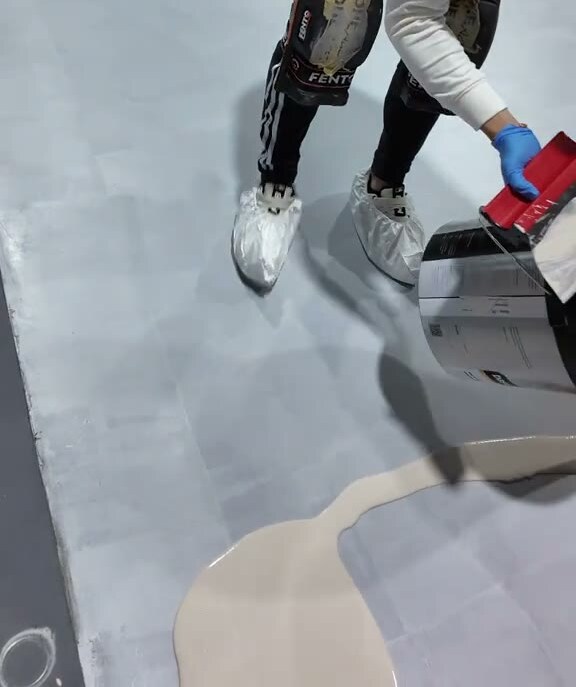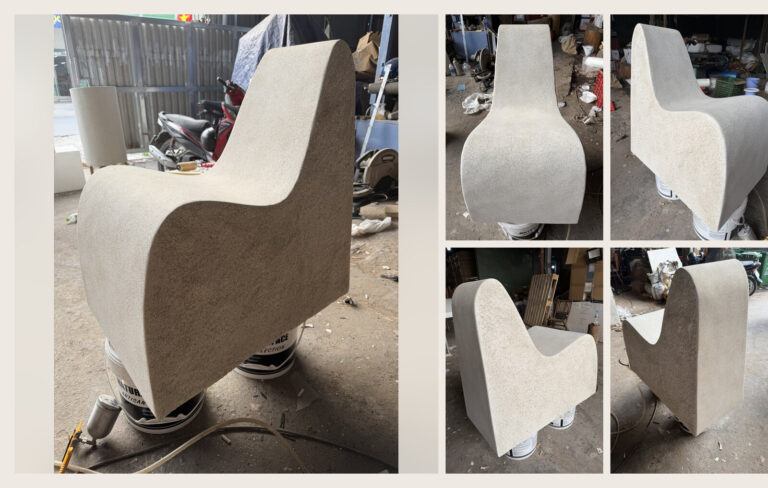
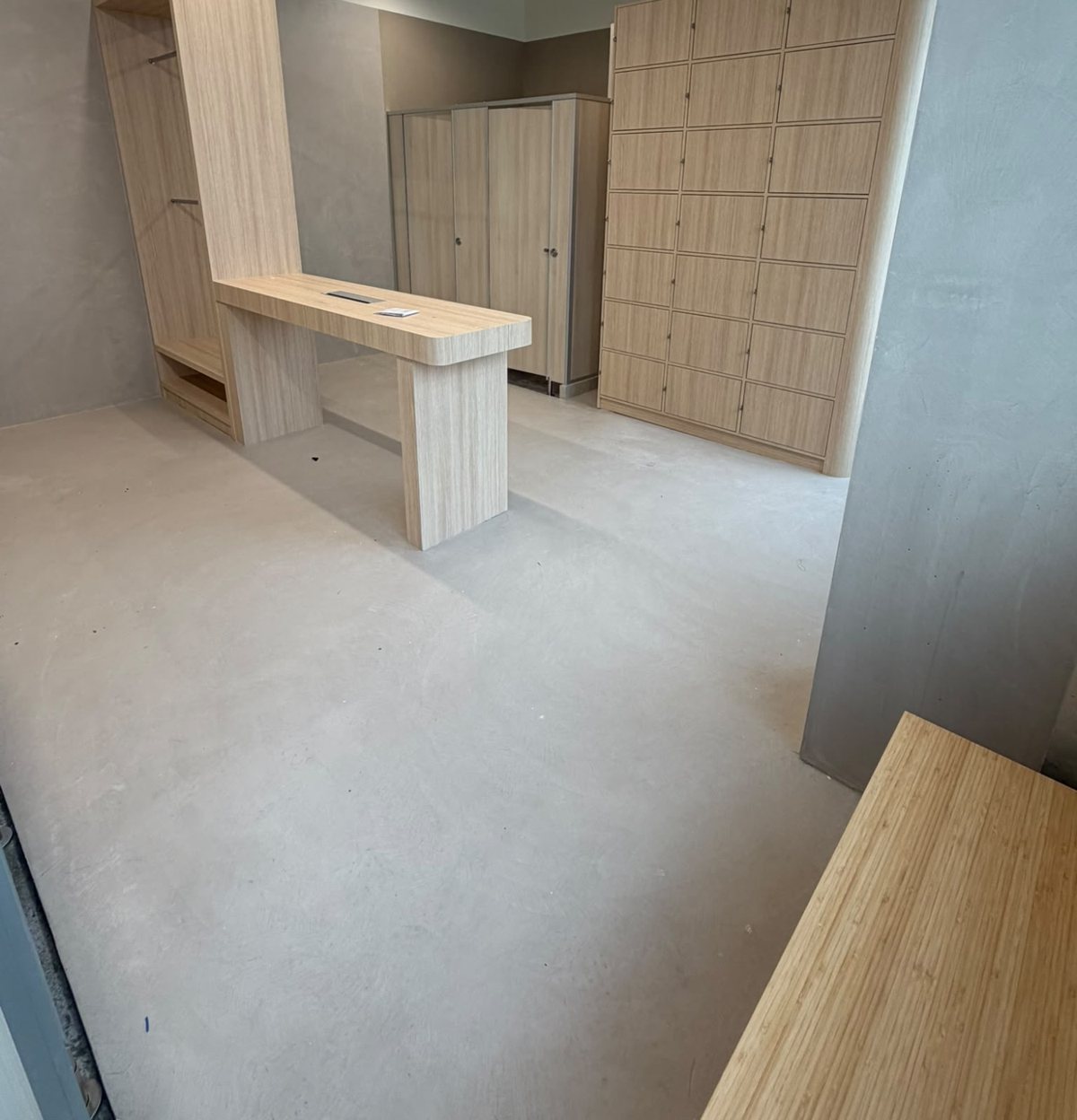
Clean microcement floors by sweeping or vacuuming, then mopping with warm water and a pH-neutral cleaner using a well-wrung mop. Avoid bleach, ammonia, acidic cleaners and abrasive pads, which can strip or dull the protective sealer. On a busy floor, the top coat can be refreshed after a few years to bring it back to new.
That is genuinely most of it. Here is the detail.
Daily and weekly routine
- Sweep or vacuum to lift grit. Sand and dust act like sandpaper under shoes.
- Damp mop with warm water and a few drops of pH-neutral floor cleaner. Wring the mop well so you are not flooding the floor.
- Dry spills quickly, especially oil, coffee, wine, soy sauce and anything acidic.
- Rinse bathroom floors and walls after use if you have hard water or lots of soap residue, then squeegee or wipe.
What to avoid
- Bleach and chlorine-based cleaners
- Ammonia
- Vinegar, lemon and other acidic “natural” cleaners
- Scouring powders, steel wool and abrasive pads
- Strong degreasers and solvents unless your applicator approves them
- Waxes and polishes not meant for the sealer
These attack the protective top coat. Once the sealer is worn through, the cement body underneath can absorb stains and water.
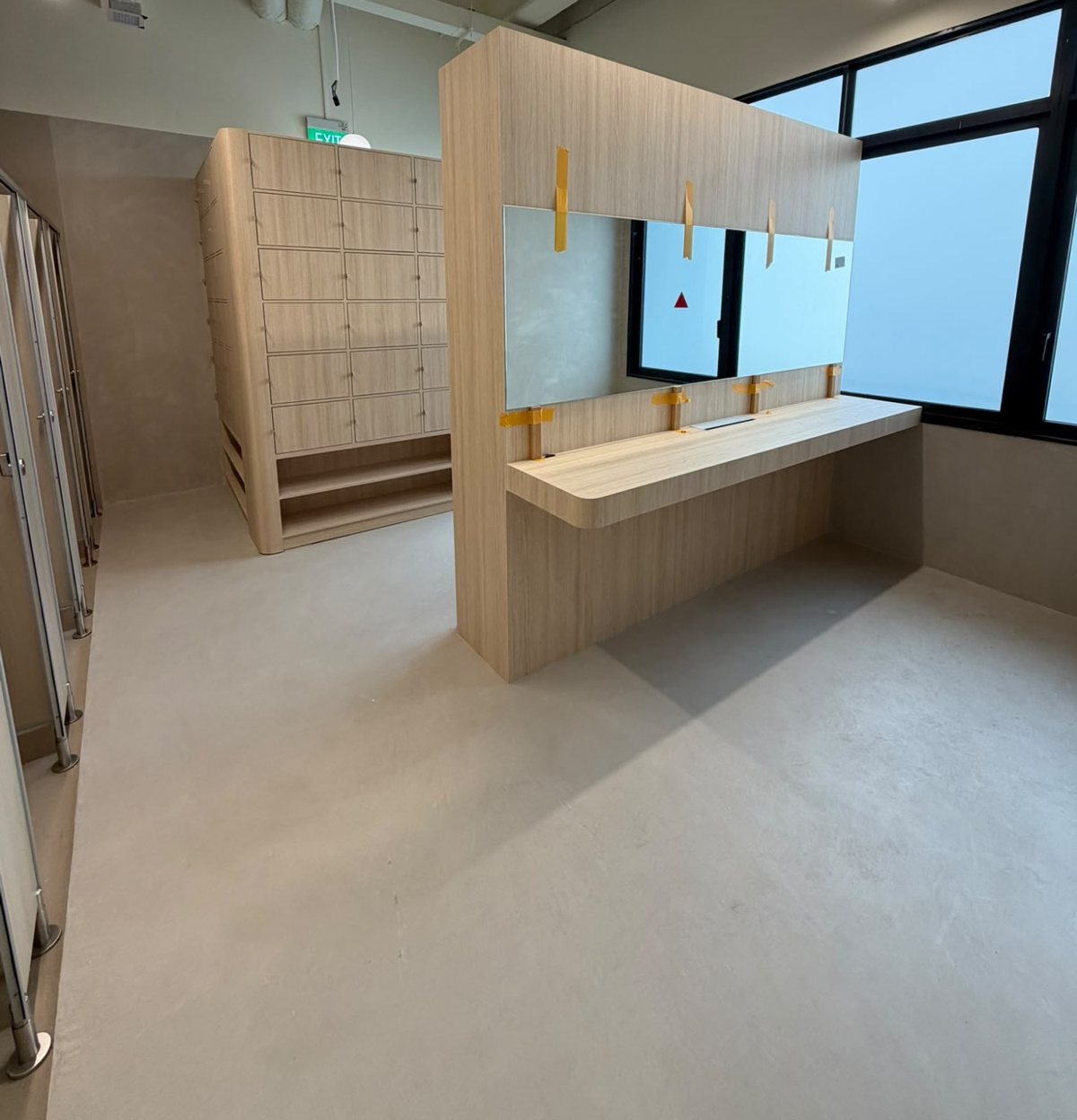
Protecting the surface
- Put felt pads under chair and table legs
- Lift heavy furniture instead of dragging it
- Use doormats at entrances to catch grit
- Use rugs under office chairs with hard castors
Microcement is scratch resistant, not scratch proof. Like any floor, it will mark if heavy items are dragged across it.
Bathrooms in a humid climate
Singapore bathrooms rarely dry out fully, so ventilation helps: run the exhaust fan or open a window after showers. Because microcement has no grout lines, there are no porous joints for mould to settle into, but soap scum and limescale can still build up on any surface. Wipe down regularly with a pH-neutral cleaner rather than reaching for bleach. More on wet areas in is microcement waterproof enough for a bathroom.
Kitchens
Wipe spills promptly, especially oil, citrus and vinegar. Use trivets for hot pans and chopping boards for knives on any microcement work surface.
When to reseal
The top coat takes the wear. On a busy floor you may notice dull patches or water no longer beading where people walk most. That is the sign to have the sealer refreshed. How often depends on traffic and care. Low-traffic walls may need very little, while an entrance or kitchen floor will need it sooner. Ask your applicator what refreshing involves before you commit to the job.
Signs to call your applicator
- Water soaking in and darkening the surface instead of beading
- A crack rather than a scratch
- Stains that will not lift with a pH-neutral cleaner
The first weeks after installation
A new microcement surface keeps hardening for a while after the last top coat goes on. Ask your applicator for their timings, but as a general rule:
- Keep foot traffic light until you are told the floor is ready
- Do not lay rugs, mats or protective sheets on it too early, as they can trap moisture
- Hold off on wet mopping and strong cleaners until the applicator says it is fine
- Put furniture back gently, with felt pads already fitted
Following these early steps protects the top coat when it is at its most vulnerable.
How Jiu Ding Sheng finishes for easy care
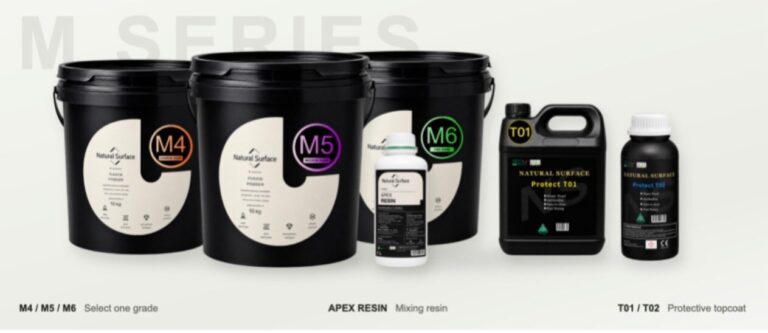
We seal every job with two protective top coats in the Natural Surface M Series (the T01 and T02 top coats), so day-to-day care is a pH-neutral cleaner and a mop. We tell you before you commit what refreshing the sealer involves. Read more on the Material page, or see sealed floors on our Projects page.
Related: how long microcement flooring lasts and does microcement crack over time.
Quick answers
Which cleaner should I use on microcement?
A pH-neutral floor cleaner diluted in warm water, applied with a well-wrung mop or soft cloth.
Can I use bleach on microcement?
No. Bleach and ammonia can strip the protective sealer. Use a pH-neutral cleaner instead.
Can I use a steam mop on microcement?
It is safer to avoid steam mops unless your applicator says your sealer can take it. A damp mop with a pH-neutral cleaner is enough.
How do I know when my floor needs resealing?
When water stops beading on the surface, or you see dull, worn patches in busy walkways, it is time to ask about refreshing the top coat.
Next step
Have questions about caring for a microcement surface, or want to see how a sealed finish feels? WhatsApp +65 8049 1188 or book a showroom visit via the contact page.