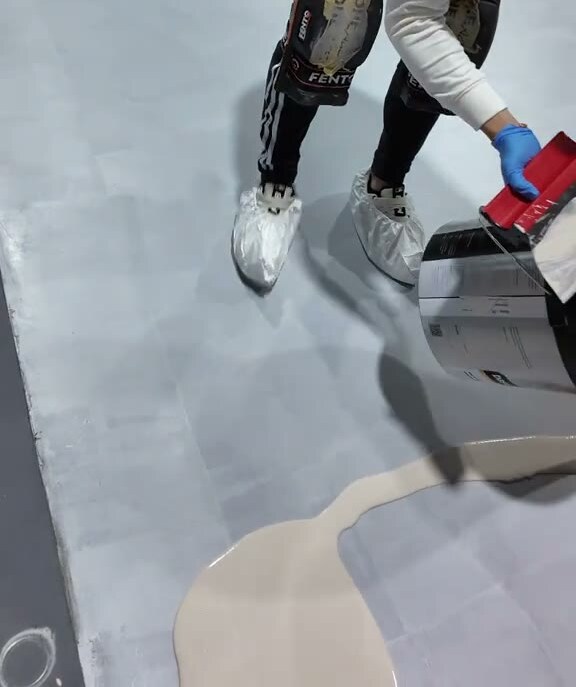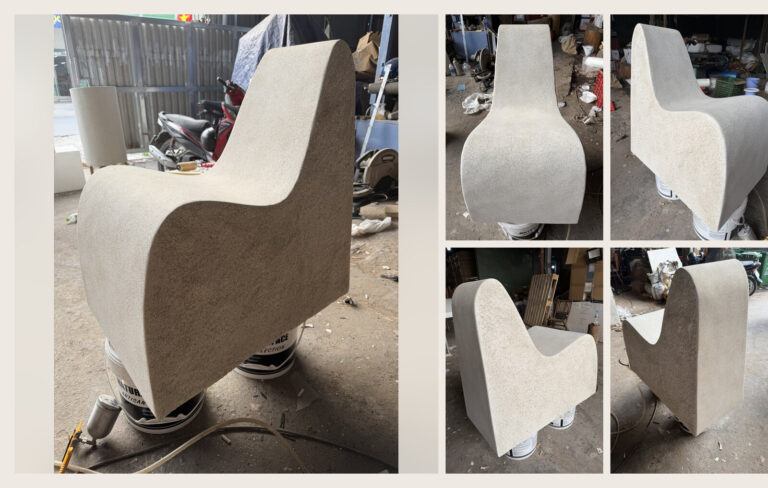
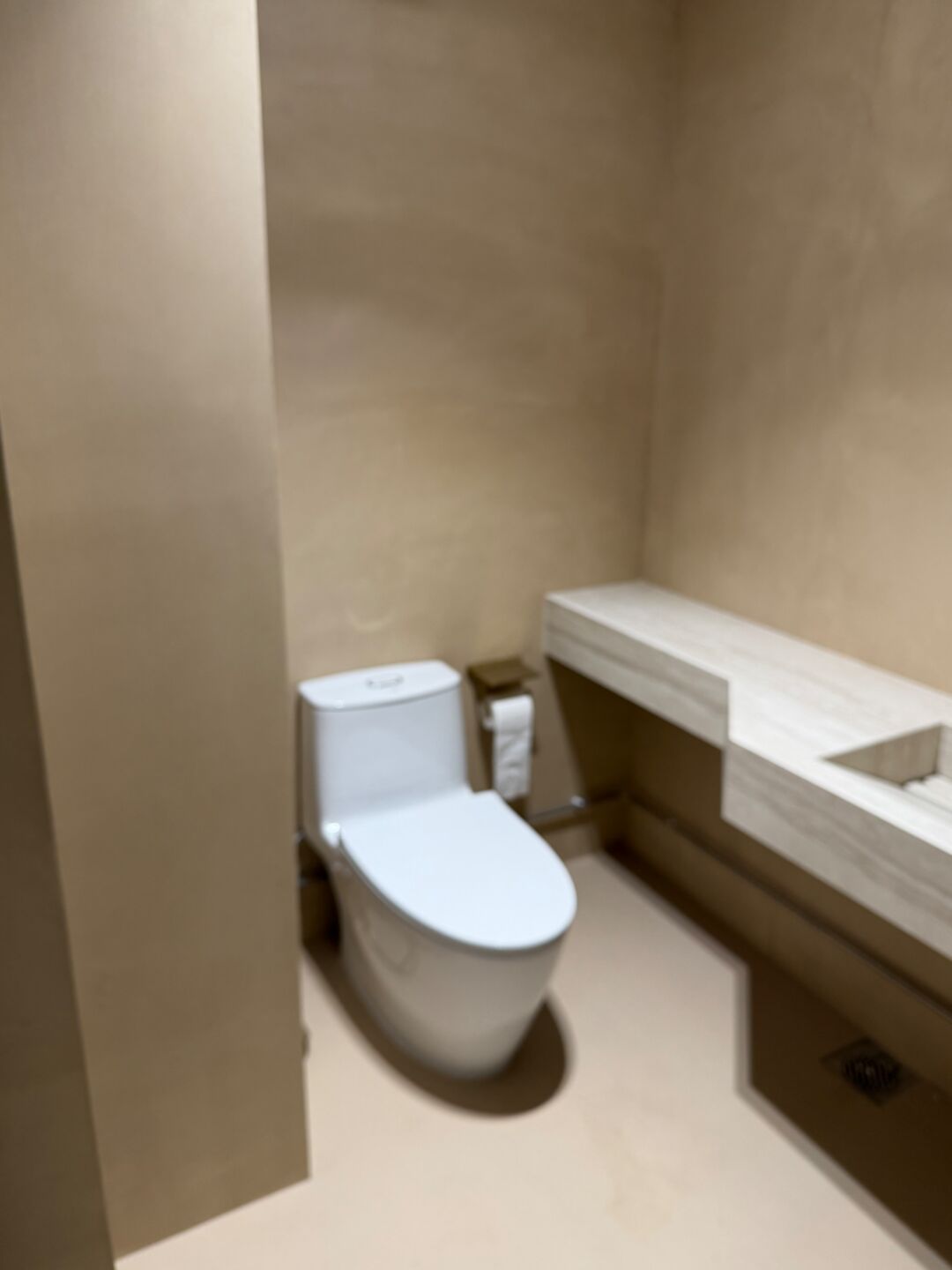
Yes. Microcement can be applied directly over existing tiles without hacking, as long as the tiles are sound, level and firmly bonded, and the surface is clean and dry. The tiles are prepared, the grout lines are dealt with, and a thin microcement system is built up on top. Loose, hollow or damp tiles must be fixed first, which is why a proper survey comes before any quote.
This is the main reason many Singapore homeowners choose microcement: no hacking, no debris and no raised floor.
How microcement goes over tiles
Exact steps depend on the product, but the general sequence is:
- Survey. Tiles are tapped to find hollow spots, and the surface is checked for cracks, damp and level.
- Repair. Any loose or hollow tiles are fixed or replaced. Damaged areas are made good.
- Clean and prepare. Grease, soap residue and sealers are removed so the new layers can bond.
- Grout lines. These are filled or bridged so they do not show through the finish.
- Build-up. The microcement layers go on by hand, followed by protective top coats.
Some systems use a primer and a reinforcing mesh. Others, like the system we use, are built to bond without a primer. Ask your applicator which applies to their product.
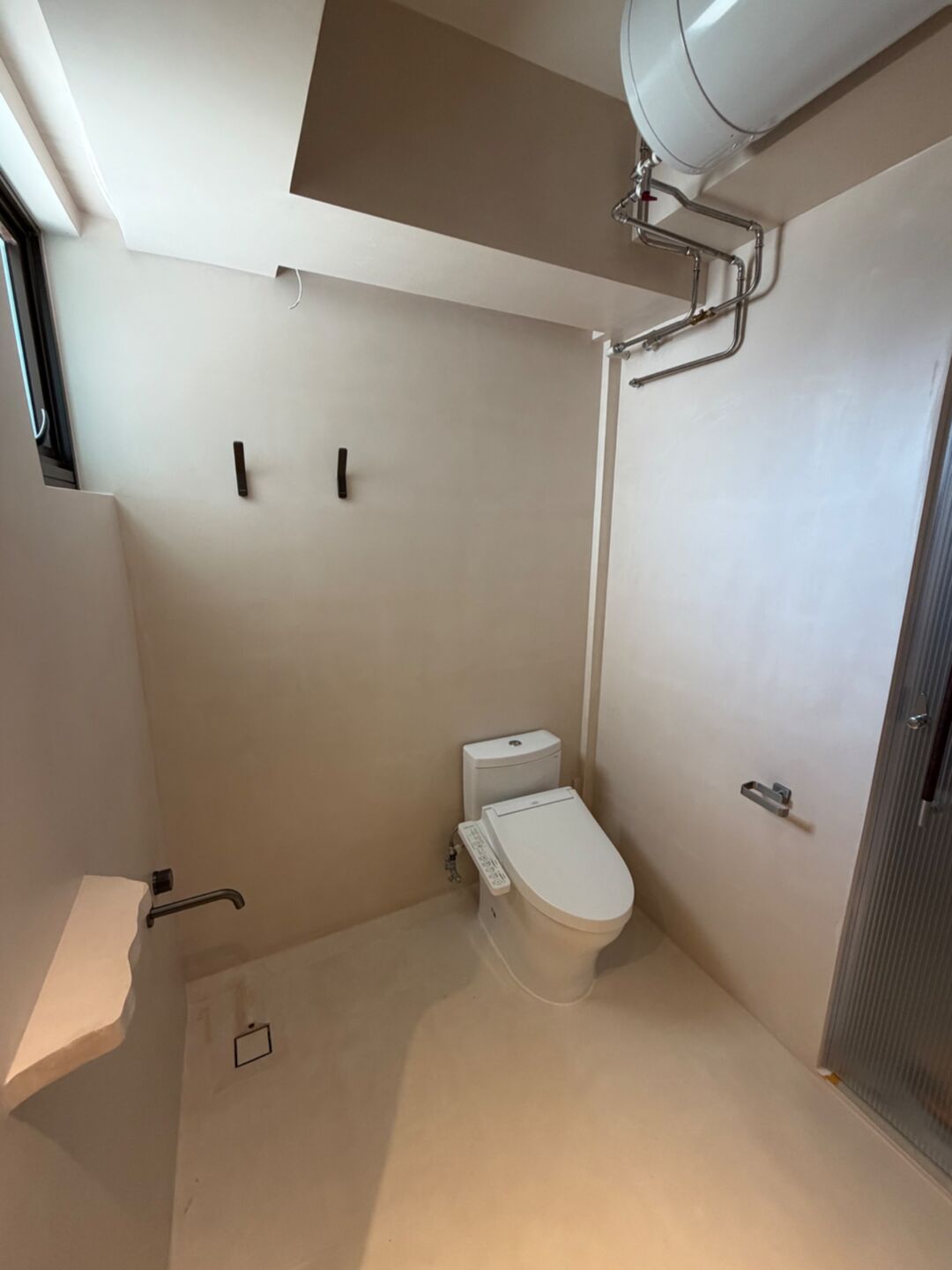
Why the tiles must be sound
Microcement is a thin skin. It follows whatever is underneath. If a tile moves, the finish above it can crack. If water is getting behind the tiles, it will not stop because there is a new layer on top. That is why a careful applicator would rather decline a surface than lay over a problem. See does microcement crack over time for more on this.
When hacking is still the right call
- Many tiles are hollow or lifting
- There is an active leak or failed waterproofing underneath
- The floor falls the wrong way to the drain and needs re-grading
- You need to change floor levels or move drainage points
In these cases the underlying problem has to be fixed first. Microcement can still be the finish afterwards.
Floor height and doors
Because the overlay is thin, floor height barely changes. Our system is 1 to 1.5mm in total, compared with roughly 40 to 60mm for a cement screed and new tile. In practice, doors still close and thresholds stay level. Read more in how thick a microcement overlay is.
HDB flats and the early years
For new HDB flats, HDB restricts hacking and replacing the original bathroom floor and wall finishes for an initial period, generally the first three years. An overlay that does not disturb the original finish or the waterproofing is generally the route people take during that time. Rules change, so check your own flat’s conditions with HDB on its renovation information page before you start.
How Jiu Ding Sheng does it
We survey what is already there before quoting. Sound, level, well-bonded tiles stay exactly where they are. We then lay the Natural Surface M Series in four layers with no primer: a base coat, a face coat and two top coats, 1 to 1.5mm in total. If a surface is not sound, we tell you rather than lay over it. You can see bathrooms and floors done this way on our Projects page and read about the material on the Material page.
Quick answers
Will the old grout lines show through microcement?
They should not, if the grout lines are properly filled or bridged before the microcement layers go on. Ask your applicator how they handle them.
Can microcement go over wall tiles as well as floor tiles?
Yes. Walls and floors can both be overlaid, as long as the tiles are firmly bonded and the surface is properly prepared.
What if some of my tiles sound hollow?
Hollow tiles should be fixed or replaced before microcement goes on. Laying over them risks cracking later.
Does microcement over tiles raise the floor much?
Very little. A typical overlay is a few millimetres. Ours is 1 to 1.5mm in total, so doors and thresholds usually stay as they are.
Next step
Send a photo of your current tiles and the rough area, and we will tell you honestly whether they can stay. WhatsApp +65 8049 1188 or reach us through the contact page.